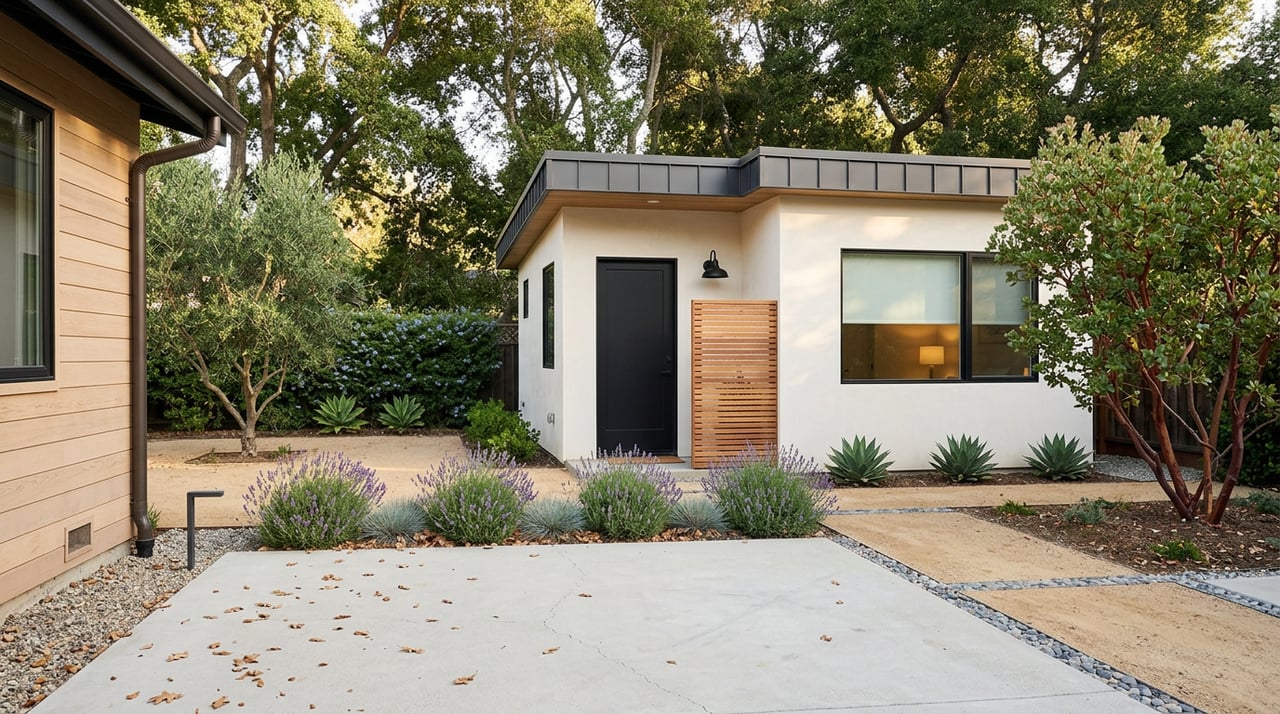
Thinking about adding a backyard cottage or converting your garage in Santa Rosa? You’re not alone. Many homeowners are exploring accessory dwelling units to create space for family, flexibility for aging in place, or steady rental income. In this guide, you’ll learn what’s allowed in Santa Rosa, how the rules work, what impacts cost and timing, and the smart steps to take before you start. Let’s dive in.
ADUs and JADUs, explained
An accessory dwelling unit is a secondary home on the same lot as your main residence. It includes a place to sleep, cook, and bathe. ADUs can be detached cottages, attached additions, or conversions of existing spaces like garages or attics.
A junior ADU is a smaller unit created within the walls of the existing home or an attached garage. JADUs include an efficiency kitchen and are typically limited to 500 square feet. They have a few unique rules, including deed restrictions and owner‑occupancy in some cases.
Where ADUs are allowed in Santa Rosa
Santa Rosa allows ADUs and JADUs on lots that permit single‑family or multifamily residential uses and that contain an existing or proposed dwelling. Most single‑family neighborhoods qualify. Always confirm your property’s zoning and any special overlays with the City before you plan a design.
How many units you can build
On most single‑family lots in Santa Rosa, you can add one ADU and one JADU, subject to size and location limits. You may also be able to create an internal ADU within existing living area or an accessory structure, again within the City’s standards. Multifamily properties follow a different set of percentage‑based rules.
Size, height, and setback rules
Getting the basics right early will save time and redesign later.
- Maximum size. New detached ADUs are generally allowed up to 1,200 square feet. Conversions often follow percentage limits tied to the existing home’s living area, up to 1,200 square feet in many cases.
- Height. Common limits include about 16 feet for one‑story detached ADUs and up to 27 feet for two‑story ADUs in certain conditions. Some transitions or taller primary homes can affect the allowed height.
- Setbacks. Santa Rosa’s standards are designed so many backyards can host an ADU. As a rule of thumb, an 800 square foot detached ADU with 4‑foot side and rear setbacks is often feasible. Hillside, creekside, floodplain, or historic‑district overlays can add special rules.
Parking, rentals, and separate sale
Parking is often the first practical question. Santa Rosa typically requires one off‑street parking space for a new detached ADU unless a waiver applies. Common waivers include if the ADU is 750 square feet or smaller, if it is a studio, if it is part of the existing residence or another existing structure, or if the property is within a half mile of transit. JADUs and internal conversions usually do not require new parking.
Use limits are also important. Santa Rosa does not allow short‑term rentals of ADUs or JADUs for fewer than 30 days. Today, ADUs in Santa Rosa cannot be sold separately from the main home. A new state law provides a path cities can opt into for separate conveyance, but local adoption varies, so check Santa Rosa’s current rules before assuming it is allowed.
Fees, utilities, and the biggest cost drivers
The City scales development impact fees. That is good news if you plan a modest unit. Many internal conversions and smaller ADUs of 750 square feet or less are exempt from impact fees and separate utility connection charges. Larger, newly constructed ADUs may see proportionate fees and, in some cases, a new water or sewer connection.
Outside of permits and fees, construction is the main budget driver. Site work, foundations, utility runs, energy‑code compliance, and finish quality set the total price. Early conversations with City Water, Fire, and Building divisions help you avoid surprises. Local planning resources also offer cost calculators that can help with order‑of‑magnitude estimates.
Fire and energy code must‑knows
Fire review happens for every ADU. While many small ADUs are not automatically required to install sprinklers under state law, local fire criteria can trigger them based on your site. Common triggers include long distances to fire access or hydrants, or an ADU located above a garage. Early coordination with Fire Plan Review reduces redesigns.
California’s energy code also affects scope and cost. New detached ADUs are often treated as new construction, which can require solar photovoltaic installation and battery‑ready electrical infrastructure. Attached ADUs and conversions may follow different compliance paths similar to additions or alterations. These rules can influence your panel size, wiring, and HVAC choices, so raise the topic with your designer from day one.
First steps: your Santa Rosa feasibility checklist
Before you sketch floor plans, verify these items:
- Zoning and overlays. Confirm your lot’s zoning and whether any overlays apply, such as Historic, Hillside, Creekside, Floodplain, or Wildland‑Urban Interface. Overlays can change setbacks, height, and review steps.
- Buildable area. Map setbacks, easements, and existing structures to see where an ADU can go. Decide whether a detached build, an attached addition, or a conversion makes the most sense.
- Utilities. Check whether you are on City water and sewer or on a private well or septic. Ask the City whether your project would need a new lateral or capacity fee based on ADU size and type.
- Fire access and vegetation. Note driveway widths, grades, hydrant distances, and defensible space. Properties in the WUI have added vegetation management considerations.
- Slope and soils. Steeper sites can mean special foundations, larger setbacks, or geotechnical reports.
Permits and timing
ADUs and JADUs are reviewed ministerially in Santa Rosa, which means your compliant project is not subject to discretionary hearings. The City must approve or deny a complete ADU or JADU application within 60 days and provide written corrections if something needs to change.
Your submittal will typically include a site plan, floor plans, elevations, sections, foundation details, energy compliance documents, and any required deeds or historic‑compatibility materials. After plan check, standard building inspections follow during construction. Timelines vary by scope, but most projects require several months from initial design through permit issuance, plus several months for construction.
Financing and tax considerations
Financing is often a key unlock. Homeowners commonly use construction loans, HELOCs, cash‑out refinances, or renovation products such as FHA 203(k), Fannie Mae HomeStyle, or Freddie Mac CHOICERenovation. Some lenders will count projected ADU rental income toward qualifying if underwriting rules are met, which can help with approval.
California has also offered ADU grant programs through CalHFA that reimburse certain predevelopment costs for eligible homeowners. Availability changes over time, so check current status before relying on grant funds.
For taxes, adding living space or building a detached structure is usually considered new construction for assessment. That can change your assessed value and may trigger a supplemental bill. Conversions may be treated differently. It is best to contact the Sonoma County Assessor for guidance on how your specific project might be assessed.
Smart design choices that pay off
You can boost flexibility, comfort, and future value with a few practical choices:
- Plan for universal design. Consider a zero‑step entry, wider interior doors, and reinforced bathroom walls for future grab bars. These features help with aging in place and widen your tenant pool.
- Right‑size the unit. Smaller footprints can qualify for fee and connection exemptions. They are also faster to build and easier to fit within setbacks.
- Think energy and electrical early. If a detached ADU will need solar and battery‑ready infrastructure, plan the panel size, roof orientation, and conduit runs up front.
- Match or complement the main home. In historic areas, compatibility is required. Even outside those districts, a cohesive exterior helps long‑term appeal.
Contractor, designer, and lender questions
Go into interviews prepared with targeted questions:
Architect or designer
- Which ADU type is most cost‑effective and likely to be approved on my lot, and why?
- Will the project need geotechnical studies, tree permits, stormwater design, or hillside adjustments?
- How will the current energy code apply, and will you manage compliance documentation?
General contractor
- Are you licensed and insured, and can you share recent ADU references?
- Will you pull all permits and manage inspections?
- Can you provide a fixed‑price contract with a clear scope, milestone‑based payments, and standard lien releases?
Lender
- Which ADU‑friendly loan options do you offer, and what documents do you need from me?
- Will you count projected ADU rent for qualifying, and under what conditions?
- How will the appraisal handle “as‑complete” value once the ADU is built?
Common pitfalls and red flags
- Skipping permits or working with an unlicensed builder. This can lead to costly legalization later and limit refinancing or resale.
- Underestimating fire‑access or water‑supply needs. Long driveways, hydrant distances, or WUI status can change scope and may trigger sprinklers.
- Ignoring slope or soils. Hillside foundations, retaining, or drainage can add meaningful cost.
- Overbuilding. A larger unit can lose small‑unit fee exemptions and add utility connection charges. Right‑sizing can protect your budget.
Official Santa Rosa ADU resources
Use these pages to verify rules, gather forms, and plan with confidence:
- City of Santa Rosa — Accessory Dwelling Units (guidance, checklists, permits). City ADU page
- Santa Rosa Municipal Code — ADUs and JADUs. Chapter 20‑42.130
- Napa–Sonoma ADU Center — Santa Rosa local rules and pre‑approved plan info. Local rules and plans
- California HCD — State ADU Handbook. HCD ADU Handbook
- California Energy Commission — 2025 Energy Code FAQs for ADUs. CEC Energy Code FAQs
- Permit Sonoma — Fire considerations and sprinkler guidance for ADUs. Fire Prevention ADU page
- CalHFA — ADU Grant Program updates. CalHFA ADU Program
- Freddie Mac — ADU financing guidance. Freddie Mac ADU resource
- Sonoma County Assessor — Assessment and tax contacts. Assessor portal
Ready to map your ADU path and understand how it fits your home’s value, timing, and long‑term goals? Let’s talk through your options and build a clear plan. Schedule a free, no‑obligation home consultation with Cozza Homes Inc..
FAQs
What is the maximum ADU size in Santa Rosa?
- Santa Rosa generally allows newly constructed detached ADUs up to 1,200 square feet, with different limits for attached or conversion units based on existing living area.
Do I need to provide parking for an ADU in Santa Rosa?
- Many detached ADUs require one off‑street space unless a waiver applies, such as if the unit is 750 square feet or smaller, a studio, part of the existing home or structure, or near transit.
Are short‑term rentals allowed for ADUs in Santa Rosa?
- No. You cannot rent an ADU or JADU for fewer than 30 days in Santa Rosa.
Can an ADU be sold separately from the main home in Santa Rosa?
- Not currently. Separate sale requires specific local adoption of new state options, so check Santa Rosa’s current code for any updates.
How long does it take to get an ADU permit in Santa Rosa?
- The City must approve or deny a complete ADU or JADU application within 60 days. Construction timelines vary by scope and site conditions.
Will building an ADU increase my property taxes in Sonoma County?
- New construction like a detached ADU or added living space can change assessed value and may trigger a supplemental bill; conversions may be treated differently. Confirm details with the Sonoma County Assessor.