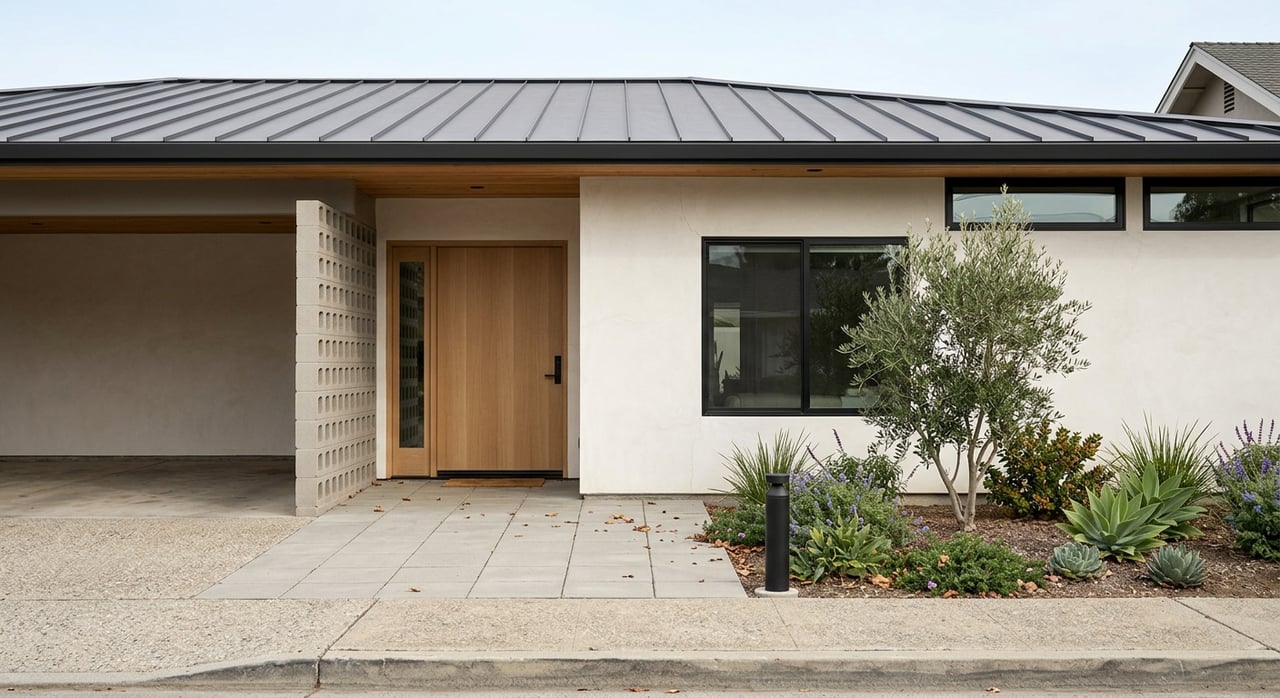
Wondering where to start if your Santa Rosa wish list includes charm, a single-story layout, or something newer and lower maintenance? You are not alone. Santa Rosa has a wide mix of home styles, and the right fit often depends on how you want to live day to day. This guide will help you match your priorities to the parts of Santa Rosa that best align with them. Let’s dive in.
How Santa Rosa’s Home Styles Break Down
Santa Rosa’s housing pattern is easier to understand when you think of it in three broad bands. There is the historic downtown core, a wider ring of postwar ranch neighborhoods, and a mix of newer rebuild and infill areas.
That pattern matters because it shapes what you are likely to find block by block. If you want early architecture and close-in character, your search will look very different from someone focused on a newer build, attached housing, or a more suburban street feel.
Historic Homes Near Downtown
If your wish list includes period details, established streets, and a strong sense of place, Santa Rosa’s older neighborhoods deserve a close look. The city identifies several historic character areas, including Cherry Street, St. Rose, West End, Railroad Square, McDonald, Olive Park, and Burbank Gardens.
These neighborhoods tend to appeal to buyers who want something distinctive rather than cookie-cutter. You may find bungalows, cottages, and older homes with architectural details that are harder to replicate in newer construction.
Cherry Street and St. Rose
Cherry Street is one of Santa Rosa’s oldest neighborhoods and has the city’s highest concentration of 19th-century buildings. Many later homes in the area were built between 1905 and 1930, often as bungalows on what were once larger lots.
St. Rose includes homes dating from 1872 through the 1940s. The area is known for many 1920s bungalows along Lincoln Street, along with several surviving 19th-century homes.
If you love older homes, these areas can offer a lot of visual character close to central Santa Rosa. They are a smart fit for buyers who value architecture, location, and a more established streetscape.
West End and Railroad Square
The West End is a compact district with mostly small houses, especially bungalows and Queen Anne cottages. The city also notes some earlier Italianate and saltbox examples, plus a few small apartment buildings.
This area connects naturally to Railroad Square, which the city describes as a historic shopping district with dining, retail, entertainment, hospitality, and nightlife. If you want a home style with personality and a location tied closely to downtown activity, this pairing is worth exploring.
McDonald, Olive Park, and Burbank Gardens
McDonald developed in 1877 as a subdivision intended to showcase elegant homes. Today, the area includes larger Gilded Age-style houses along McDonald Avenue, along with later bungalows on streets such as Spring Street and St. Helena Avenue.
Olive Park offers a different scale. It is a compact enclave of mostly one-story wooden houses arranged around a neighborhood park, which can appeal to buyers who want character in a smaller footprint.
Burbank Gardens is also one of Santa Rosa’s historic districts and remains important in the city’s residential development history. For buyers who want a home with historic roots, these areas provide several distinct options.
What to Know About Historic Review
Historic charm often comes with extra planning considerations. Santa Rosa notes that exterior changes in designated landmarks and preservation districts can require a Landmark Alteration Permit.
That does not mean historic ownership is a hassle. It simply means you should understand the review process early if updates are part of your plan. Knowing that upfront can help you choose the right home with fewer surprises later.
Ranch Homes and Single-Story Streets
If your wish list leans practical, Santa Rosa has a strong supply of ranch-style housing outside the downtown core. The city’s historic survey notes that ranch style predominates beyond the older center of town.
For many buyers, that translates to more single-story homes, a more suburban street pattern, and layouts that feel straightforward and functional. These areas can be especially appealing if ease of movement, simpler floor plans, or a classic mid-century feel matter to you.
Edgewood Farms
Edgewood Farms is one of the clearest examples. The city says the neighborhood was developed in the early 1950s and consists mainly of mid-century ranch-style homes.
If you are specifically looking for a mid-century ranch in Santa Rosa, this area should be on your radar. It fits buyers who want a recognizable architectural style without moving too far from everyday shopping and city amenities.
East-Side Neighborhood Feel
More broadly, east-side neighborhoods often read as more suburban and single-story than the close-in historic districts. That can create a very different lifestyle feel, even within the same city.
Instead of focusing on vintage details or downtown proximity, many buyers in these areas prioritize layout, lot use, and access to parks, trails, and shopping centers. If that sounds more like your day-to-day priorities, the east side may be a stronger match.
Parks, Trails, and Daily Convenience
For some buyers, the home style is only half the story. The surrounding amenities can matter just as much, especially if you want outdoor access and easy errands built into your routine.
Howarth Memorial Park is a major anchor on this front. The city lists 137.79 acres with a bike trail, boat ramp, fishing, playground, tennis and pickleball courts, restrooms, and trails.
Santa Rosa also highlights the Santa Rosa Creek Trail, the Joe Rodota Trail, and the Prince Memorial Greenway as part of a citywide network of creek trails and multi-use paths. For buyers drawn to ranch neighborhoods and practical living, these outdoor features can help narrow the search.
Nearby east-side shopping anchors include Lakeside & Mission, Montecito Shopping Center, St. Francis Shopping Center, and the Bennett Valley and Annadel centers. These kinds of daily-use destinations often help shape which neighborhood feels easiest to live in.
Newer Builds and Rebuild Areas
If your wish list starts with newer construction, Santa Rosa offers a few clear patterns. Some areas stand out because of post-fire rebuilding, while others reflect newer infill and attached-housing development.
For buyers who want newer materials, more recent systems, or a lower-maintenance feel, these areas can be especially relevant. They may also offer a different visual style than Santa Rosa’s older neighborhoods.
Fountaingrove and Coffey Park
Fountaingrove and Coffey Park are Santa Rosa’s clearest rebuild examples. A city summary of wildfire damage reports that 1,368 single-family homes in Fountaingrove and 1,230 single-family homes in Coffey Park were destroyed in the 2017 fires.
Because of that rebuilding, both areas now include significant newer housing stock replacing earlier homes. The city also notes that infrastructure work in Coffey Park is still underway in 2026, which is useful context if you are considering that area.
New Development Pipeline
Santa Rosa’s active development pages also show a continuing pipeline of newer housing options. Creekside Village Townhomes on Montgomery Drive would add 163 three-story townhome-style units, while Meadow Creek Townhomes on Bellevue Avenue would add 63 attached townhomes.
The Meadow at Rincon Valley proposes 42 detached single-family homes, and the same development pages show a 21-lot detached-home proposal at Fountaingrove. For buyers who want newer inventory trends, these project areas are worth watching closely.
Townhomes and Lower-Maintenance Options
If your priority is lower upkeep, attached housing may be the best fit. In Santa Rosa, the strongest concentration of townhomes and low-maintenance attached housing is tied to Downtown, Montgomery Drive, Bellevue Avenue, and the Mendocino Avenue corridor.
These locations can work well if you want less exterior maintenance and a more lock-and-leave lifestyle. They can also be a practical option if you want to stay near central services and transportation.
Transit and Central Access
Downtown is the city’s strongest concentration of retail and dining, anchored by Courthouse Square, Railroad Square, and Santa Rosa Plaza. For some buyers, that central access is just as important as the home itself.
Santa Rosa’s SMART information also notes frequent CityBus service between the Transit Mall and the Downtown SMART Station, plus North Santa Rosa station access from the Coddingtown Transit Hub. If you want attached housing close to transit connections, central Santa Rosa deserves a close look.
How to Match Your Wish List
If you are comparing Santa Rosa neighborhoods, start by getting clear on the lifestyle you want first. The style of home usually follows that decision.
Here is a simple way to think about it:
- Want historic charm and close-in character? Focus on Cherry Street, St. Rose, West End, Railroad Square, McDonald, Olive Park, and Burbank Gardens.
- Want a ranch home or more single-story streets? Look closely at Edgewood Farms and other east-side postwar neighborhoods.
- Want newer construction or rebuild context? Explore Fountaingrove, Coffey Park, Rincon Valley project areas, and current development corridors.
- Want lower maintenance and transit access? Prioritize Downtown, Montgomery Drive, Bellevue Avenue, and the Mendocino Avenue corridor.
The key is not chasing every option at once. When you know whether your top priority is character, simplicity, newer construction, or convenience, Santa Rosa becomes much easier to navigate.
Why Local Guidance Matters
On paper, two Santa Rosa neighborhoods can seem similar. In practice, the housing style, block pattern, and nearby amenities can create a very different experience once you live there.
That is why it helps to tour with a clear strategy and local context. If you want help narrowing Santa Rosa neighborhoods to the home style and lifestyle that fit you best, connect with Cozza Homes Inc. for a free, no-obligation home consultation.
FAQs
Which Santa Rosa neighborhoods are best for historic homes?
- For historic homes in Santa Rosa, strong options include Cherry Street, St. Rose, West End, Railroad Square, McDonald, Olive Park, and Burbank Gardens.
What should buyers know about historic districts in Santa Rosa?
- In Santa Rosa designated landmarks and preservation districts, some exterior changes can require a Landmark Alteration Permit, so it is smart to review that early in your search.
Where can you find ranch-style homes in Santa Rosa?
- Ranch-style homes are common outside the downtown core, and Edgewood Farms is one of the clearest examples of a mid-century ranch neighborhood.
Which Santa Rosa areas have newer homes or rebuilds?
- Fountaingrove and Coffey Park are the clearest rebuild areas with significant newer housing stock, and active project areas include Rincon Valley, Montgomery Drive, Bellevue Avenue, and Fountaingrove.
Where are lower-maintenance townhomes in Santa Rosa?
- Lower-maintenance attached housing is most closely associated with Downtown, Montgomery Drive, Bellevue Avenue, and the Mendocino Avenue corridor.
Which Santa Rosa areas are strongest for downtown access and transit?
- Downtown Santa Rosa and nearby central areas stand out for access to retail, dining, CityBus connections, and the Downtown SMART Station.